

Every valve bank we install has to be serviced again someday — a diaphragm wears out, a solenoid fails, or a zone just needs adjusting. On this job, the existing setup meant digging out an old, overgrown valve box every time that happened. We replaced it with a new inline valve assembly built on schedule 80 unions, so future swaps stay quick and inexpensive instead of turning into another excavation.
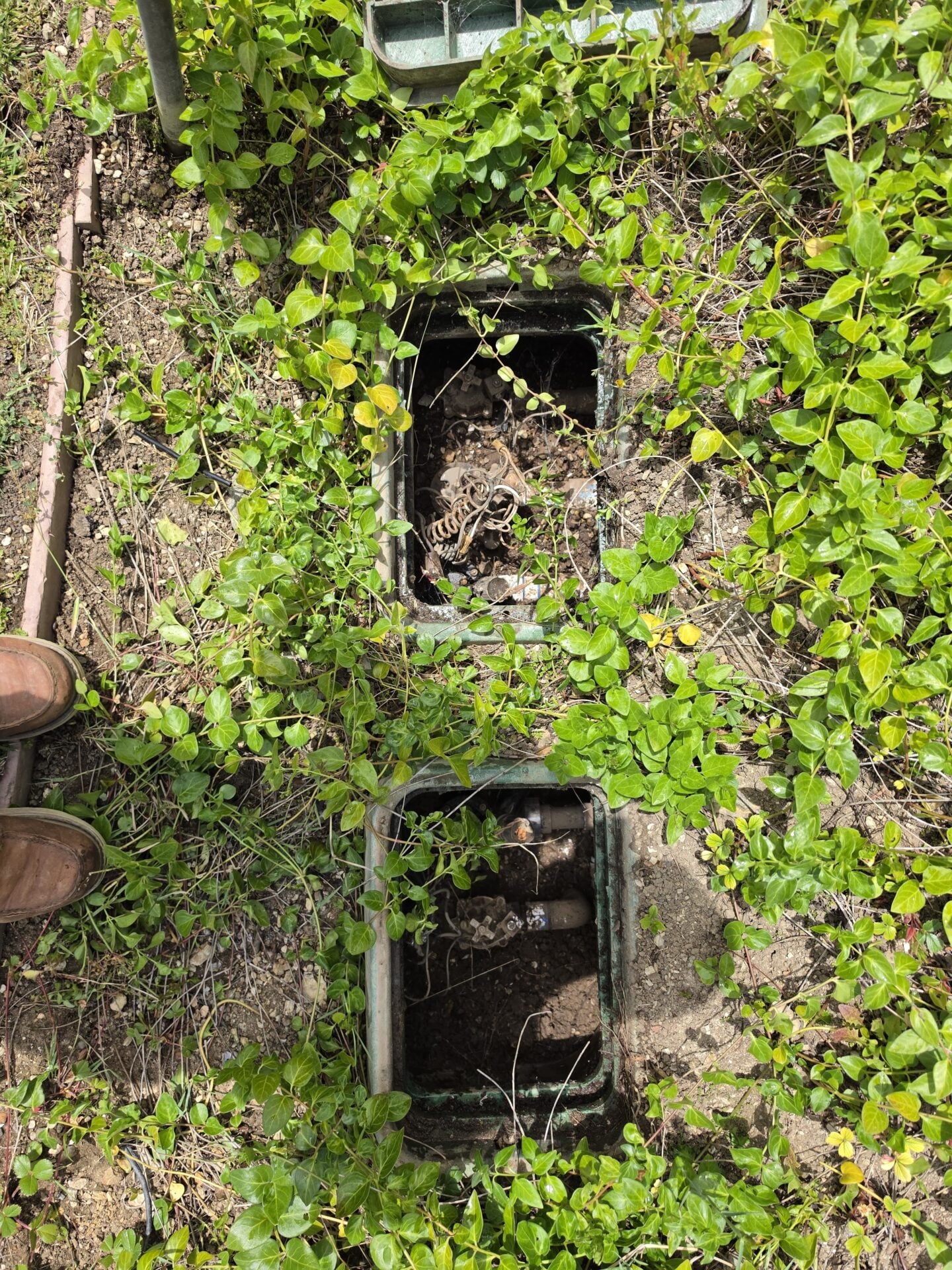
What we found
The old valve setup was tucked into a buried access box that had grown over with vegetation. Getting to the valves for any kind of service meant clearing around the box and exposing the entire manifold. It worked, but it made routine maintenance more expensive and more time-consuming than it needed to be.
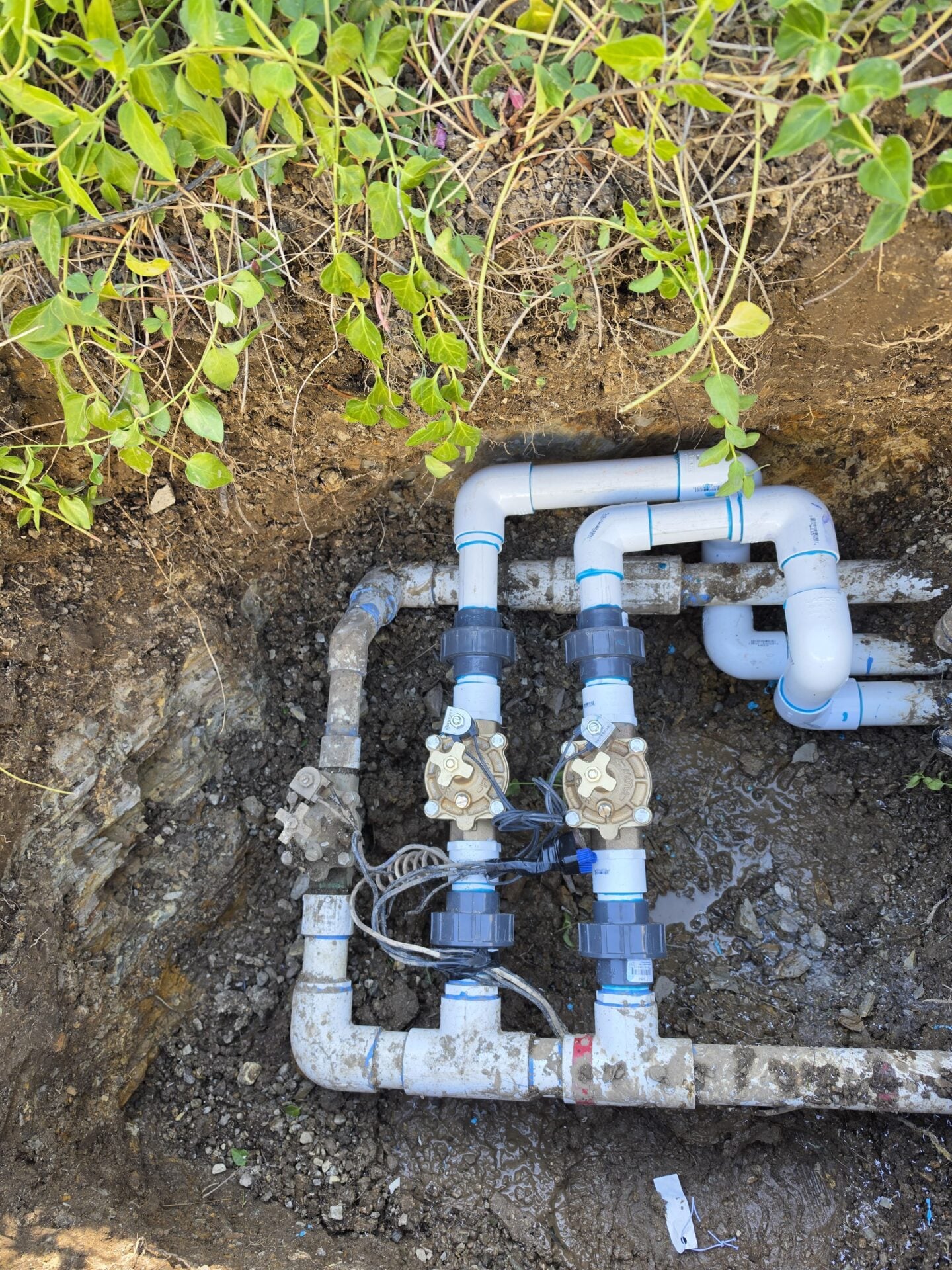
Why schedule 80 unions
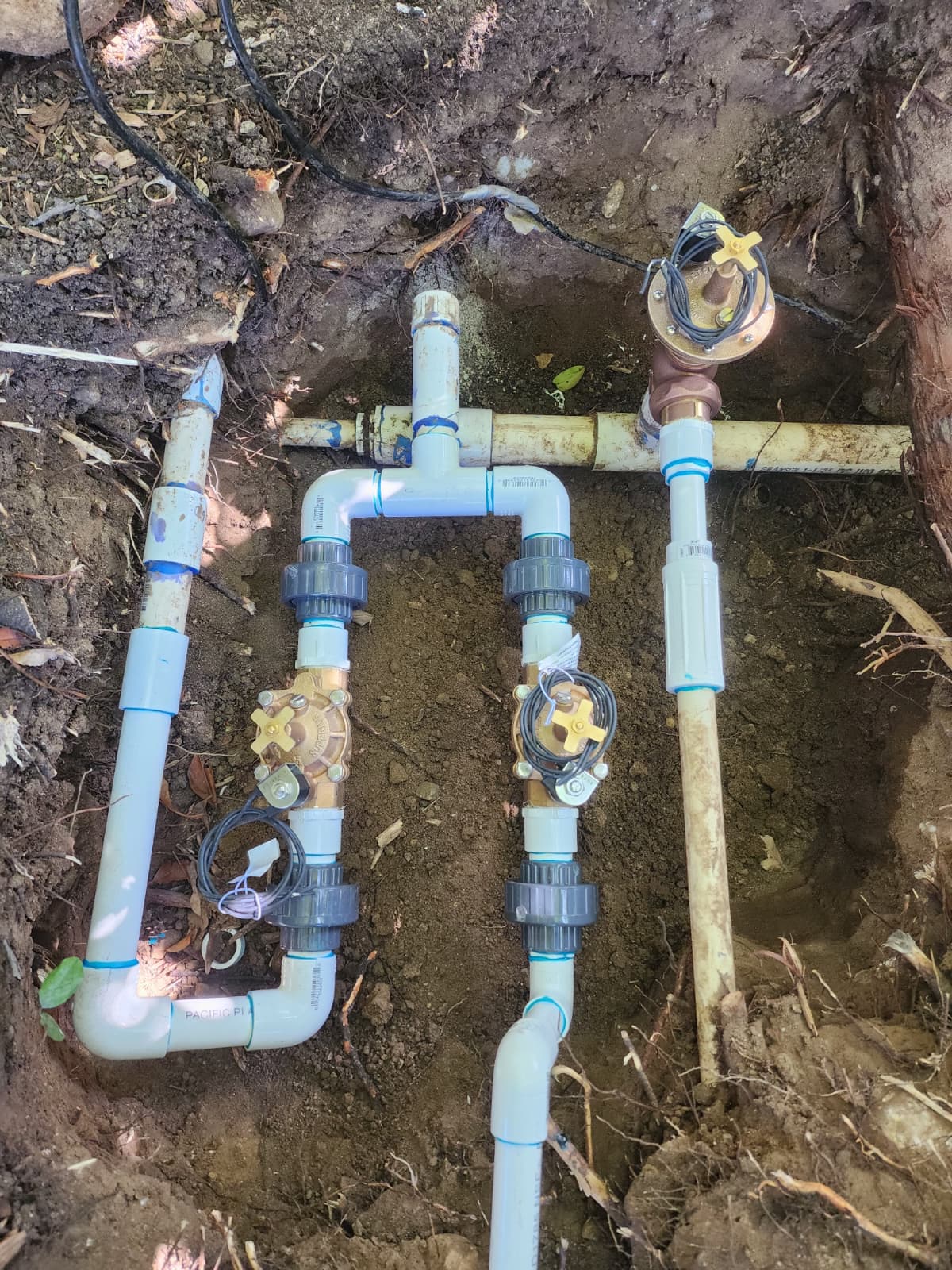
Installing the new valves with schedule 80 unions means each valve can be disconnected and swapped on its own, without having to expose or dig out the whole valve bank again in the future. We use schedule 80 unions and fittings instead of the typical schedule 40 for the added strength — thicker-walled parts at exactly the connections that take the most pressure and wrench torque. That keeps future valve swaps easy and less costly — the whole point of doing the job this way the first time.
If your sprinkler system has a valve bank that’s become a hassle to access, or you’re not sure what’s going on underground, we can take a look. See our broken pipe repair guide for more on diagnosing common issues, or check our sprinkler repair services. Call us at (805) 390-7437 and we’ll take it from here.