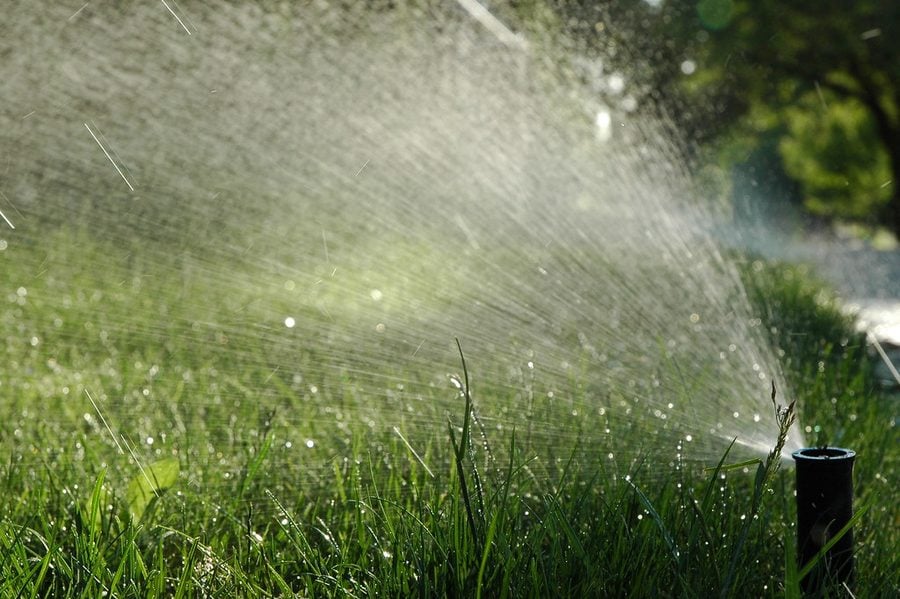
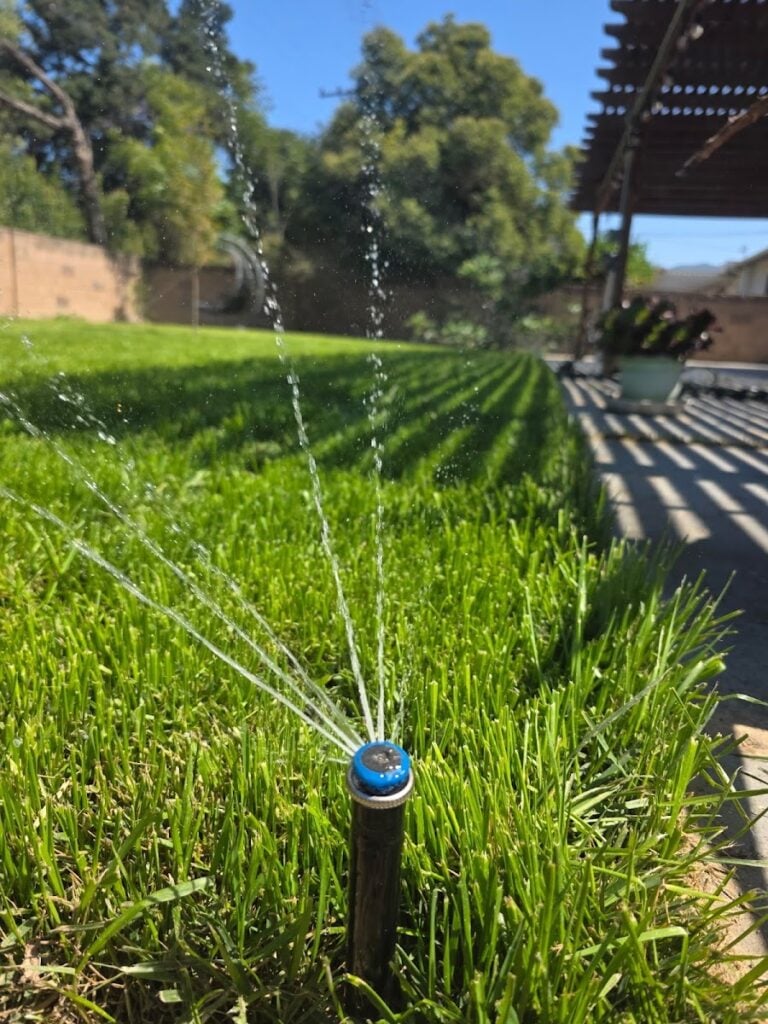
A brown lawn with the water on usually means coverage gaps, a broken sprinkler head, low pressure, or a clogged nozzle. Other signs show up at the head itself: water throwing sideways instead of in an even arc, a head that stays down while the zone runs, or one that keeps weeping after the zone shuts off.
Not every symptom that looks like a head is a head. If a zone bubbles up from the ground instead of the heads, or one section of lawn stays mushy, the lateral line or a fitting below grade is the likelier failure — that is leak repair work rather than head work. If a whole zone will not come on at all, start at the zone itself.

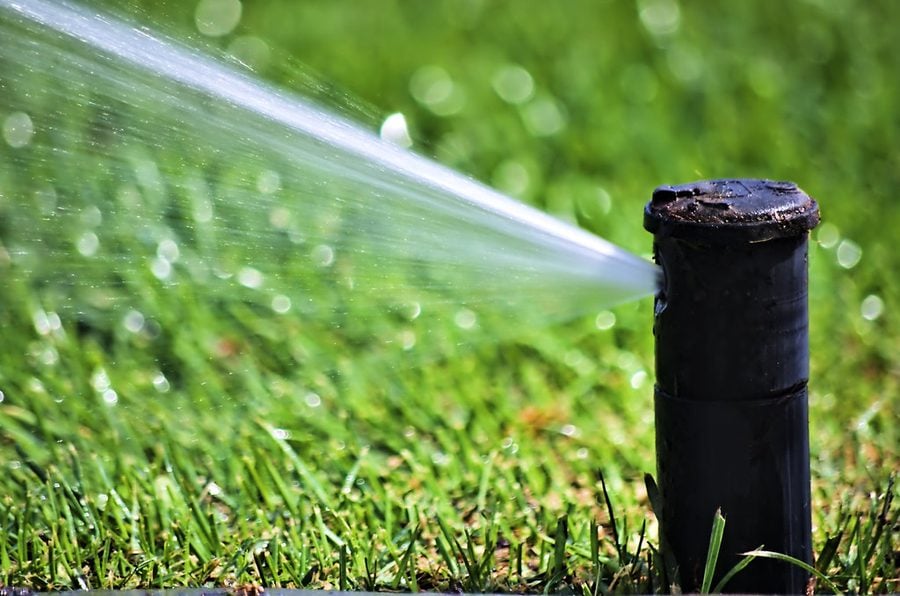
We run the zone first. Watching it run shows which heads are actually failing and which ones only look wrong because a neighbouring head is throwing water past them.
From there the work is usually one of a few things: clearing or swapping a clogged nozzle, resetting the arc and radius on a head that is watering the fence or the driveway instead of the lawn, or replacing a head that is cracked, sheared off, or no longer sealing. Most visits pick up more than the head that was reported — misaligned heads, clogged emitters and small leaks tend to show up together once the system is running.

Not every failing head has to come out. A clogged nozzle, an arc that has drifted off the lawn, or a head that has been knocked sideways can often be put right without changing the body.
Replacement is the answer when the head itself is damaged — a cracked body, a sheared riser, or a head that will not seal or retract. Repair usually wins when the problems are isolated: a broken head, one sticking valve, a single zone with weak coverage on an otherwise sound system. When a system is past that point across the board, replacing the zone is the more sensible conversation.
Hunter is one of the lines we install and service most, and we do a lot of high-efficiency MP Rotator conversions — swapping worn spray heads for rotary nozzles that water more slowly and evenly, so less of it runs off down the driveway. Converting older systems to MP Rotators is some of the most common high-efficiency work we do.
The same goes for older PGP rotors: when a rotor zone wears out, we almost always convert it to MP Rotators too. And one rule matters more than any product choice: a conversion is done by the zone, never by the head. An MP Rotator puts water down at about a quarter of the rate of the spray nozzle it replaces — Hunter’s own zoning guidance is that nozzles with different precipitation rates never share a zone — so mixing the two means part of the lawn gets a completely different amount of water than the rest in the same run time: one area drowns while another stays dry. If one head on a zone changes to an MP Rotator, every head on that zone changes with it. More on the lines we carry: Hunter irrigation products.

Thousand Oaks sits on heavy clay soil through much of the city, and clay changes what a head repair has to accomplish. Water pools and runs off long before it soaks in, so short, repeated cycles beat one long soak every time.
That is why we care about what the heads in a zone are doing collectively, not just the one that broke: heads with matched precipitation rates so every part of a zone gets the same amount of water, and zones set up to support cycle-and-soak scheduling. More on how we approach systems here: sprinkler repair in Thousand Oaks.
Evergreen Sprinklers has been repairing and installing irrigation across Thousand Oaks, Westlake Village, Newbury Park, Agoura Hills and the Malibu coast since 1972.
Head repairs usually happen as part of a wider look at the system. While we are on site we check every head and valve, clear any debris that has settled in the lines, and test coverage across each zone — which is the easiest time to catch a head that got clipped by a mower or a zone that is not covering the way it used to.
We cover Thousand Oaks and the surrounding Conejo Valley communities, out to Camarillo, Moorpark and the Malibu coast.
Tell us what the zone is doing and we will take it from there.